I built Roast My Design System to answer a problem I kept seeing in AI-generated interfaces: the output is often almost right, but not quite.
The reason is often not the model. It is the repository.
Roast measures what is actually in the codebase, shows where the problems are, and turns the findings into rules an AI agent can use. It is free, open source and runs locally with no telemetry.
AI can write the UI. But what does it learn from?
An AI coding agent does not start with a clean design system. It looks at the repository in front of it. If that repository contains 112 colours, four Button implementations and dozens of arbitrary spacing values, the agent has no reliable way to know which version is canonical.
The result is familiar: interfaces that look almost right, but gradually drift away from the product's actual design system. So instead of asking whether AI can generate good UI, I set out to measure how safe the repository was for an AI agent to build on.
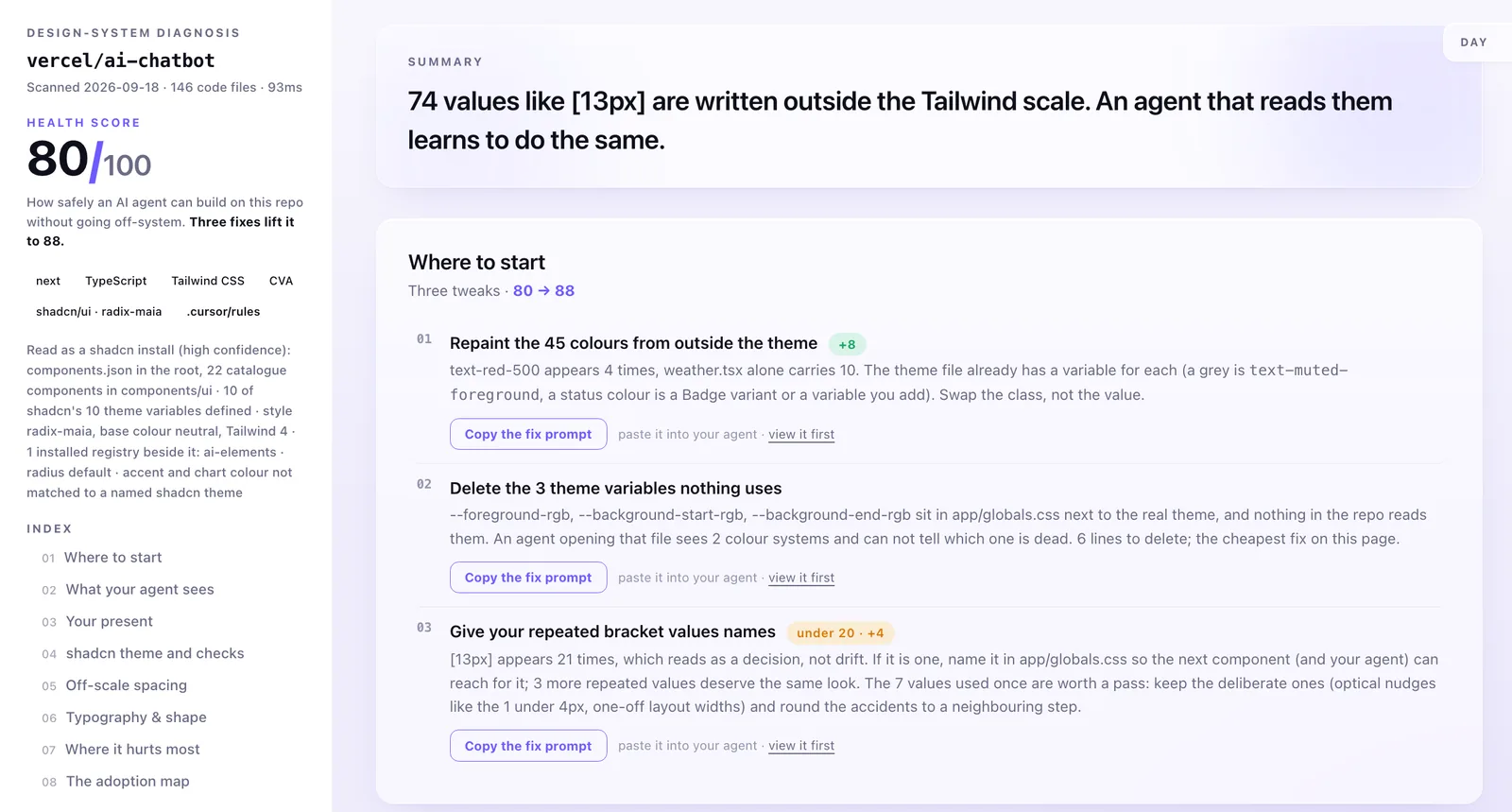
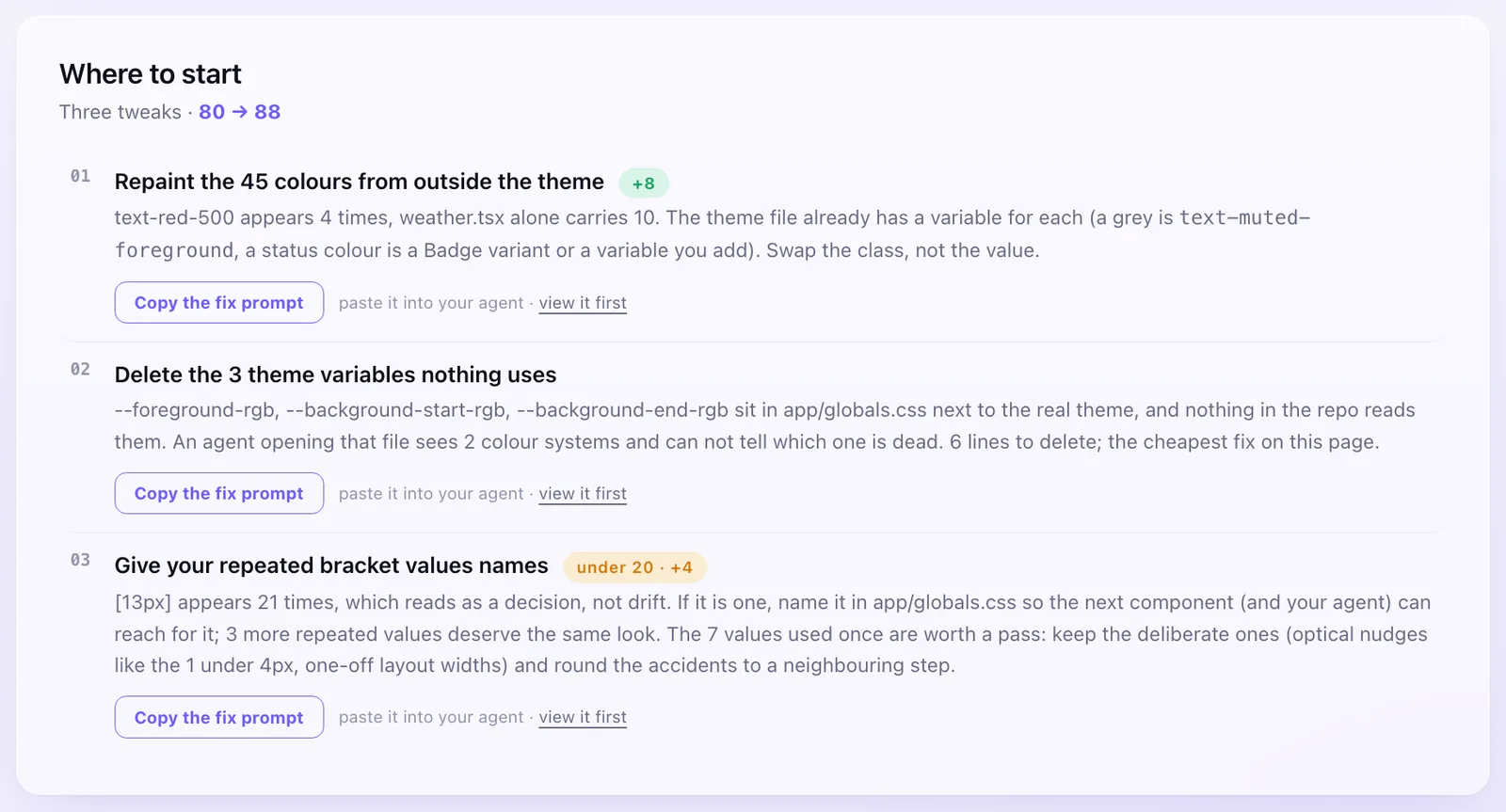
The first principle was simple: measure the code, not the documentation. Roast scans the repository deterministically for the patterns an agent is likely to copy: near-identical colours, off-scale spacing, duplicated components, inline styles, arbitrary values and stale agent rules. Every finding has a real file path.
"Claude narrates; it never counts."
The harder design problem was deciding what not to count. A chart can need its own colours; a component library can contain values that are not product code. So the score is grounded in three yardsticks: an Ideal Design System, a benchmark of public repositories and established design systems. Repo-kind profiles judge a shadcn app and an MUI product by different rulers, and anything that can't be measured reliably is reported as "not measured" rather than zero.
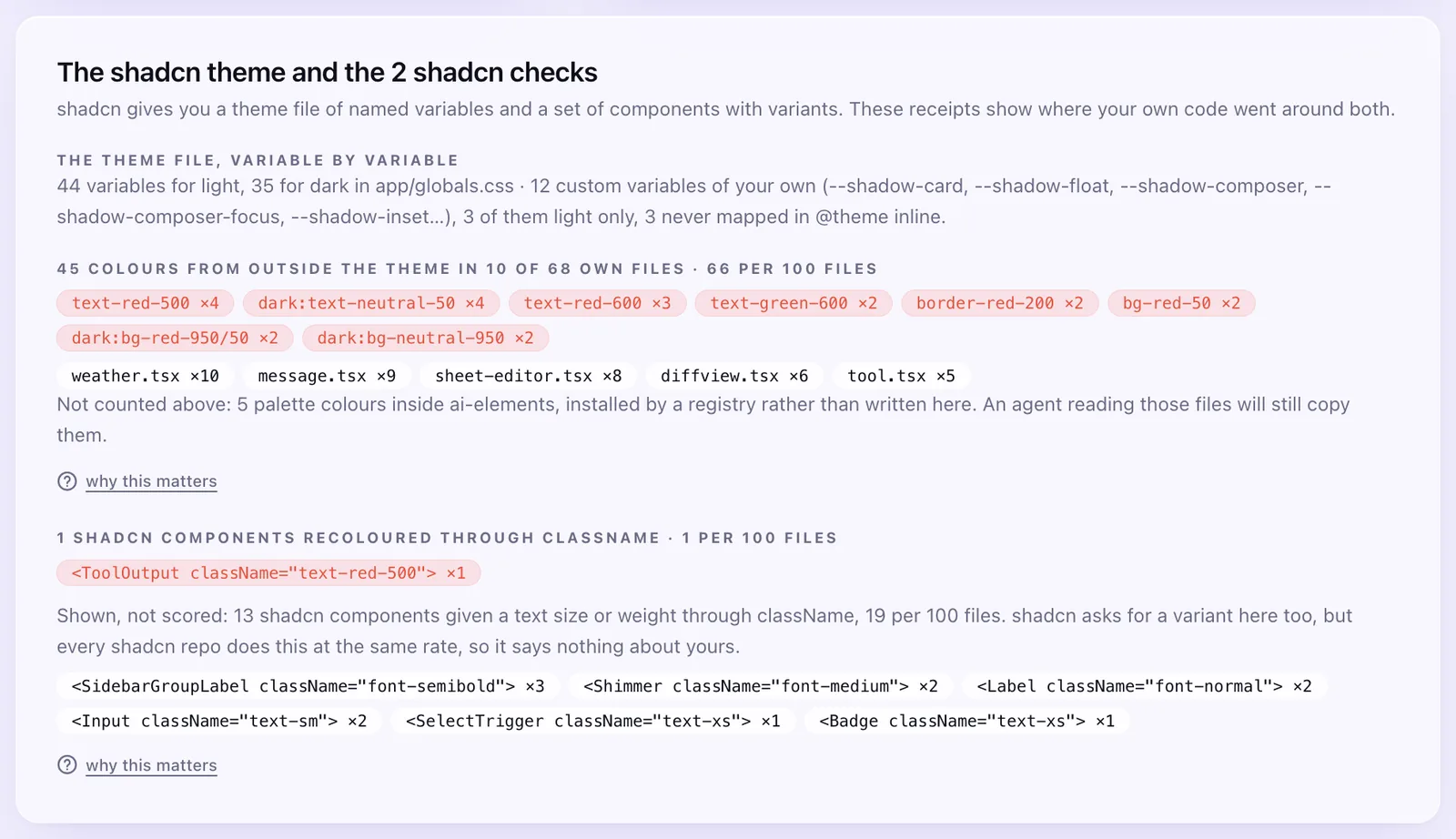
The output could have been a list of problems. Instead, I designed it around one question: what should you do next? The report starts with a verdict, then reduces the work to three concrete moves, each with an expected score impact and a fix prompt the user can hand straight to their agent.
A repeated value might be a mistake, or it might be a decision that has never been given a name. The report helps tell the difference rather than encouraging blind cleanup.
Roast then turns the diagnosis into rules grounded in the repository itself (real tokens, canonical components, known duplicates) and injects them into the files agents actually read: CLAUDE.md, AGENTS.md and Cursor rules. It checks those files too, because a rule pointing at a file that no longer exists can be worse than no rule at all.
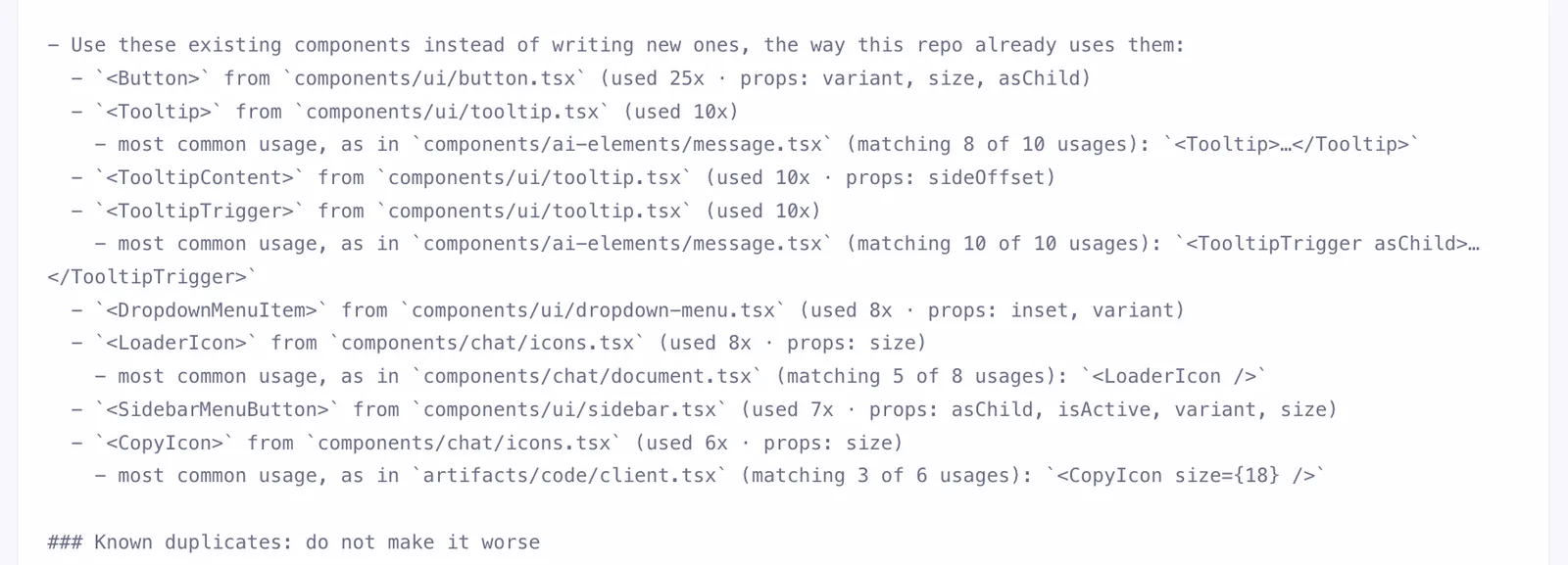
The report was only the beginning. The MCP server lets an agent ask the repository about its design system while it is working: find the canonical component, find the right token, validate changes and review the final diff.
The goal was to move the design system from something humans consult into something the agent can actively use.
- 01Context before building
roast_get_context - 02Find while building
roast_find_token - 03Validate before saving
roast_validate - 04Review before finishing
roast_review
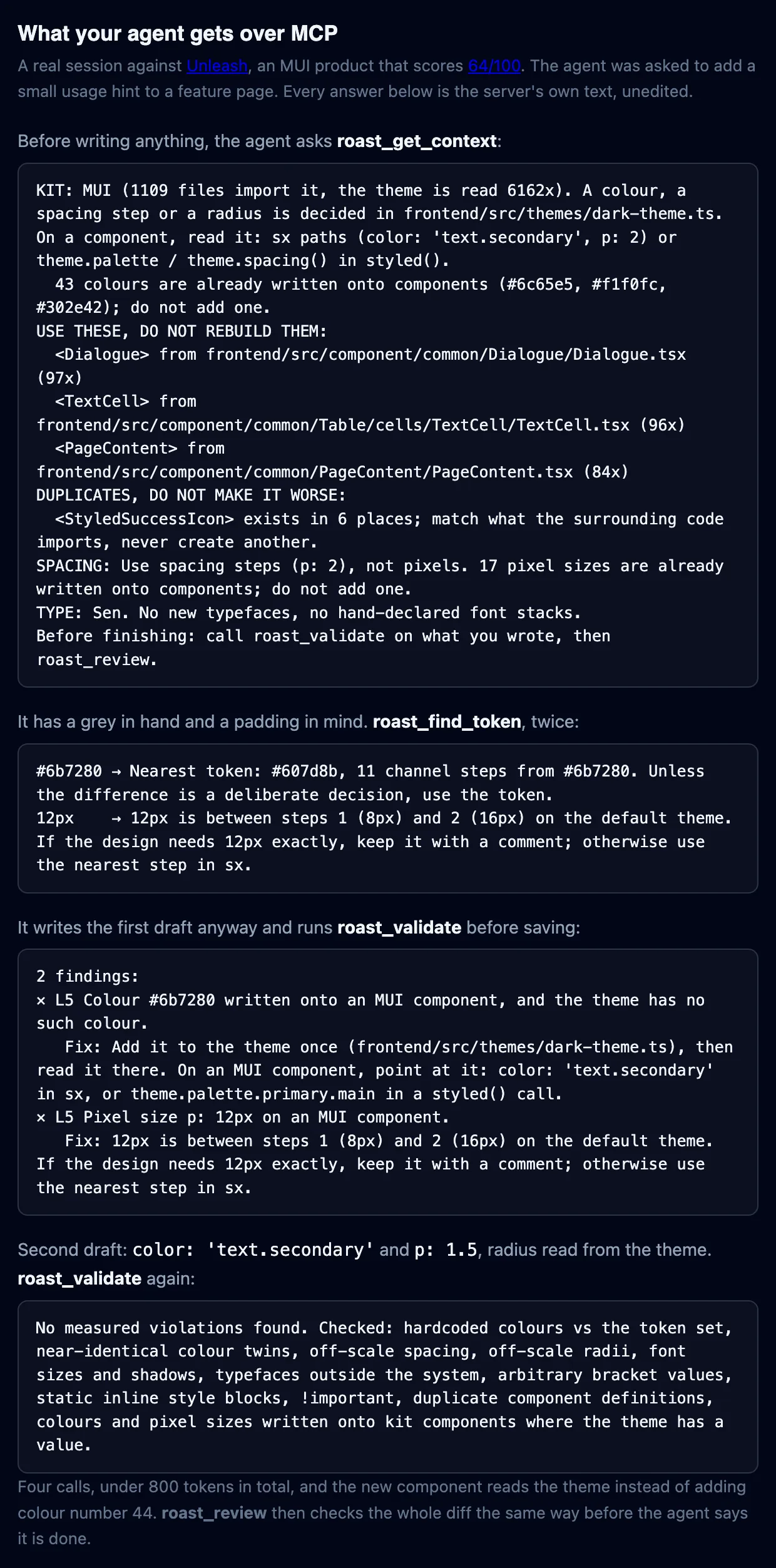
A real session against Unleash, an MUI product. Every answer is the server's own text, unedited. See the live MCP example ↗
- July 23Project created
- August 1npm CLI
- August 15Agent rules and stale-rule detection
- August 17MCP server
- August 29guard-my-design-system
- SeptemberProfiles, benchmark expansion, plugin and review workflow
I built Roast as designer, product owner and architect, with Claude Code as the implementation partner. I directed the product, experience, architecture, rules, benchmarks and tests, and used AI to move quickly through unfamiliar technical territory.
In under two months it grew from a Claude Code skill into a CLI, rules generator, MCP server and plugin, all built around the same scanning engine. 311 commits in two months.
The project was released publicly from the beginning. As of September 19, 2026:
- 20K+npm downloads
- 100published versions
- 112benchmark repositories
- 11hosted example reports
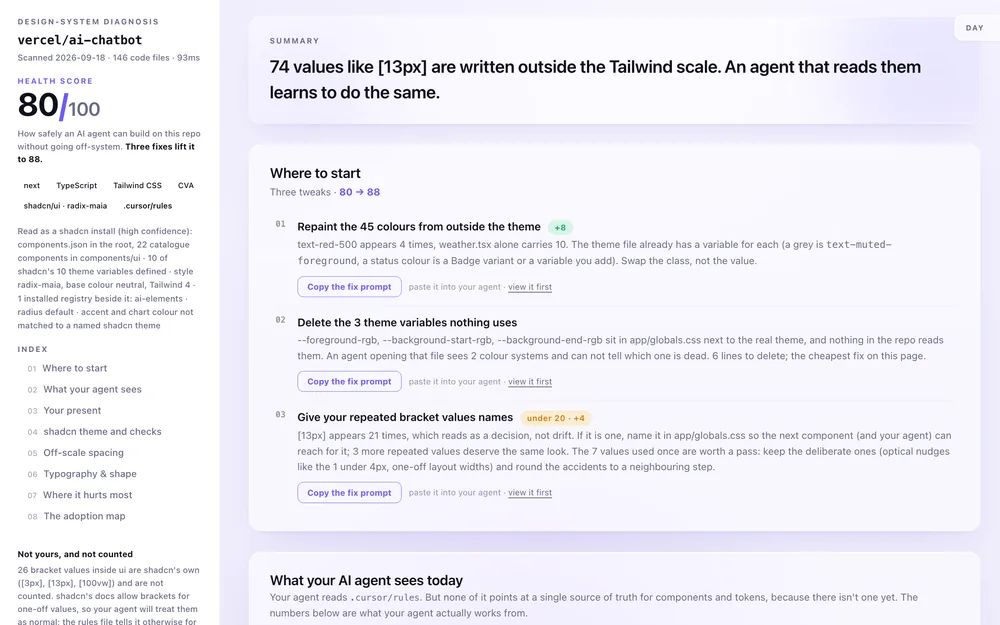
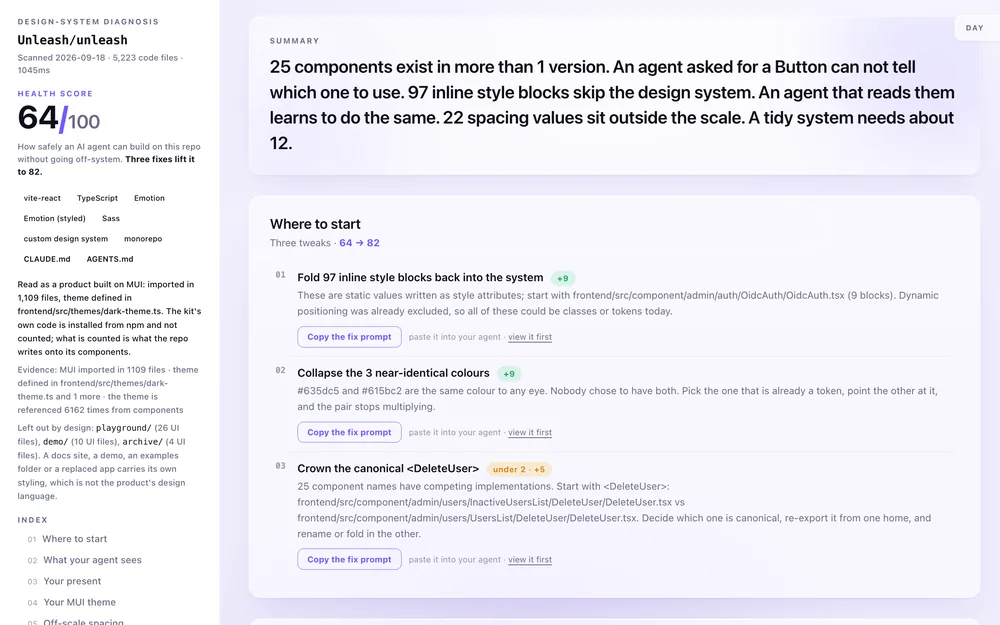
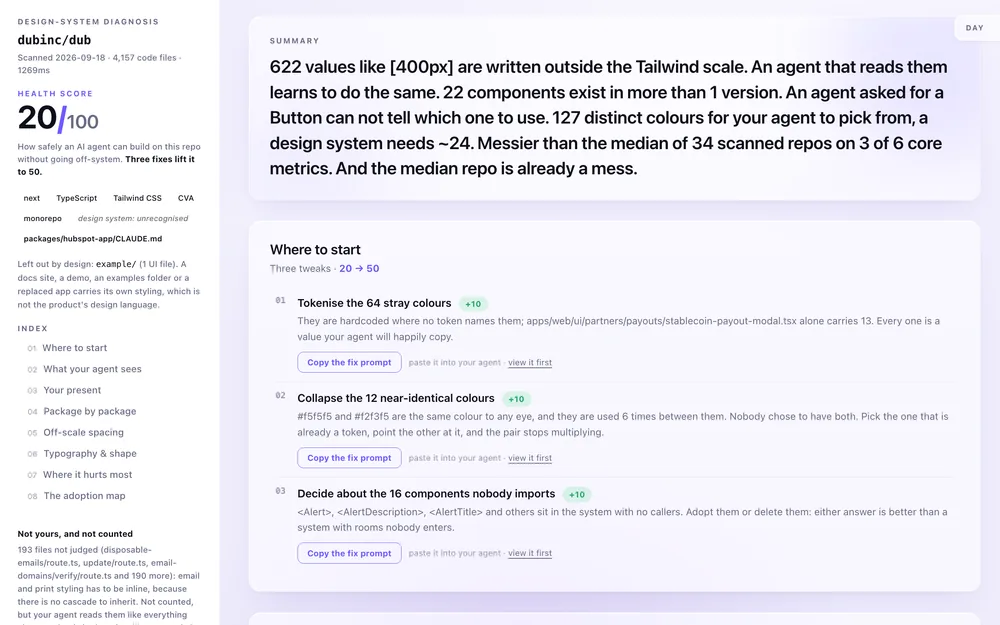
When AI generates interfaces, the design system changes role.
The repository itself becomes part of the AI's design context.
The most interesting part of building Roast was discovering that the hard problem was not making the scanner clever.
It was deciding what the scanner could honestly say.
Roast My Design System is free and open source. Run it locally:
npx roast-my-design-system@latest
AI Summit Barcelona 2026
Your AI Can Write the UI. This Makes Sure It Writes Your UI. ↗
Auditorium Stage · September 2026