Safeguard Global · Design Principal · 2022–24
Building AI before the patterns existed
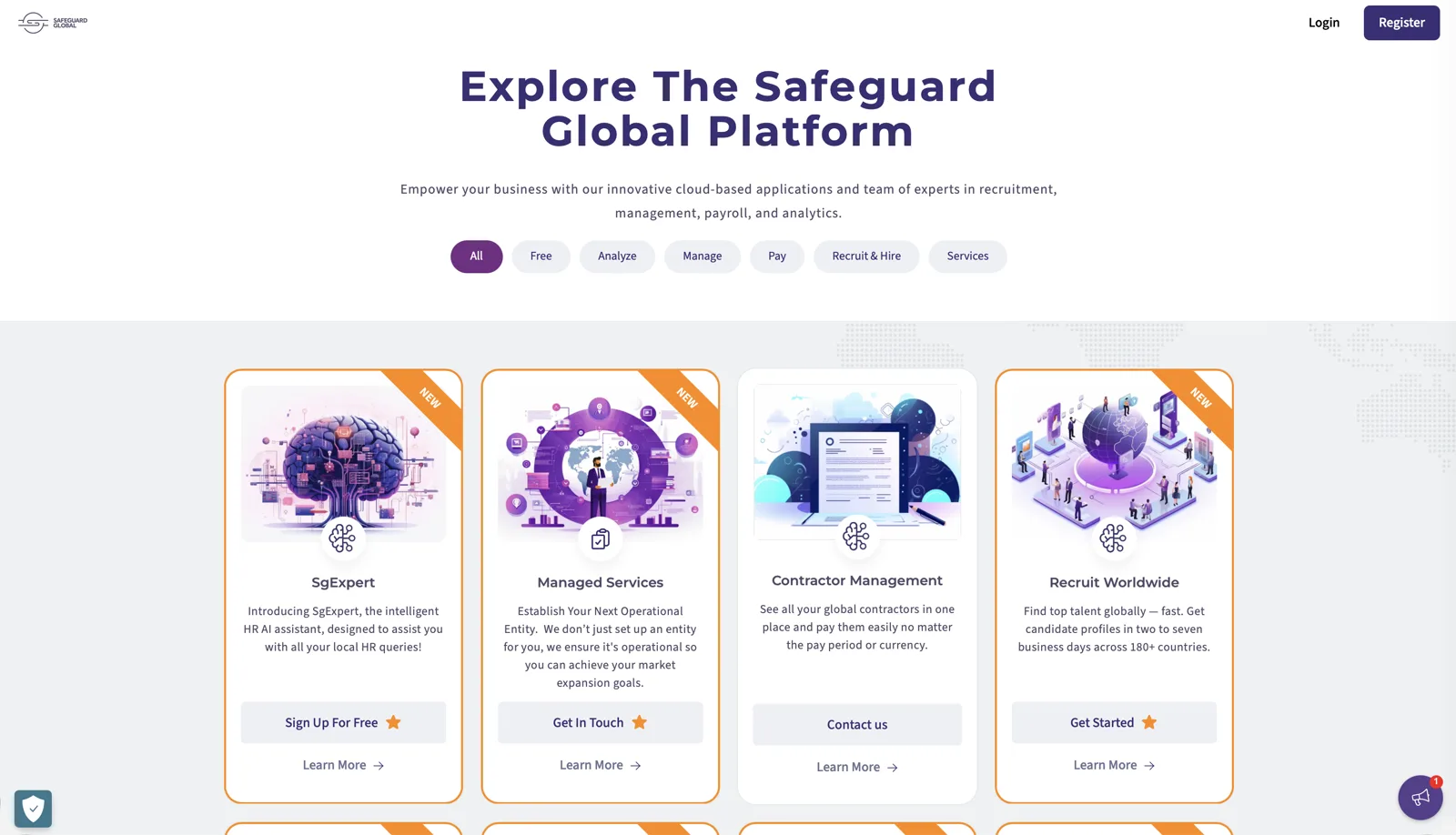
Safeguard Global hires and pays people in countries where its customers have no legal entity: 187 countries, serving 1,500+ organisations with support from more than 400 in-country experts.
The expertise is the product. Employment law, tax, benefits and notice periods vary by country and change constantly, with much of that knowledge held by local experts.
That meant customer questions often depended on a human response. We explored whether parts of that expertise could become easier to access through the product.
The product contained a huge amount of specialised knowledge, but accessing it often meant knowing where to look or asking someone who knew the answer.
The challenge wasn't simply making information searchable. In payroll and employment, a confident but incorrect answer can have real consequences.
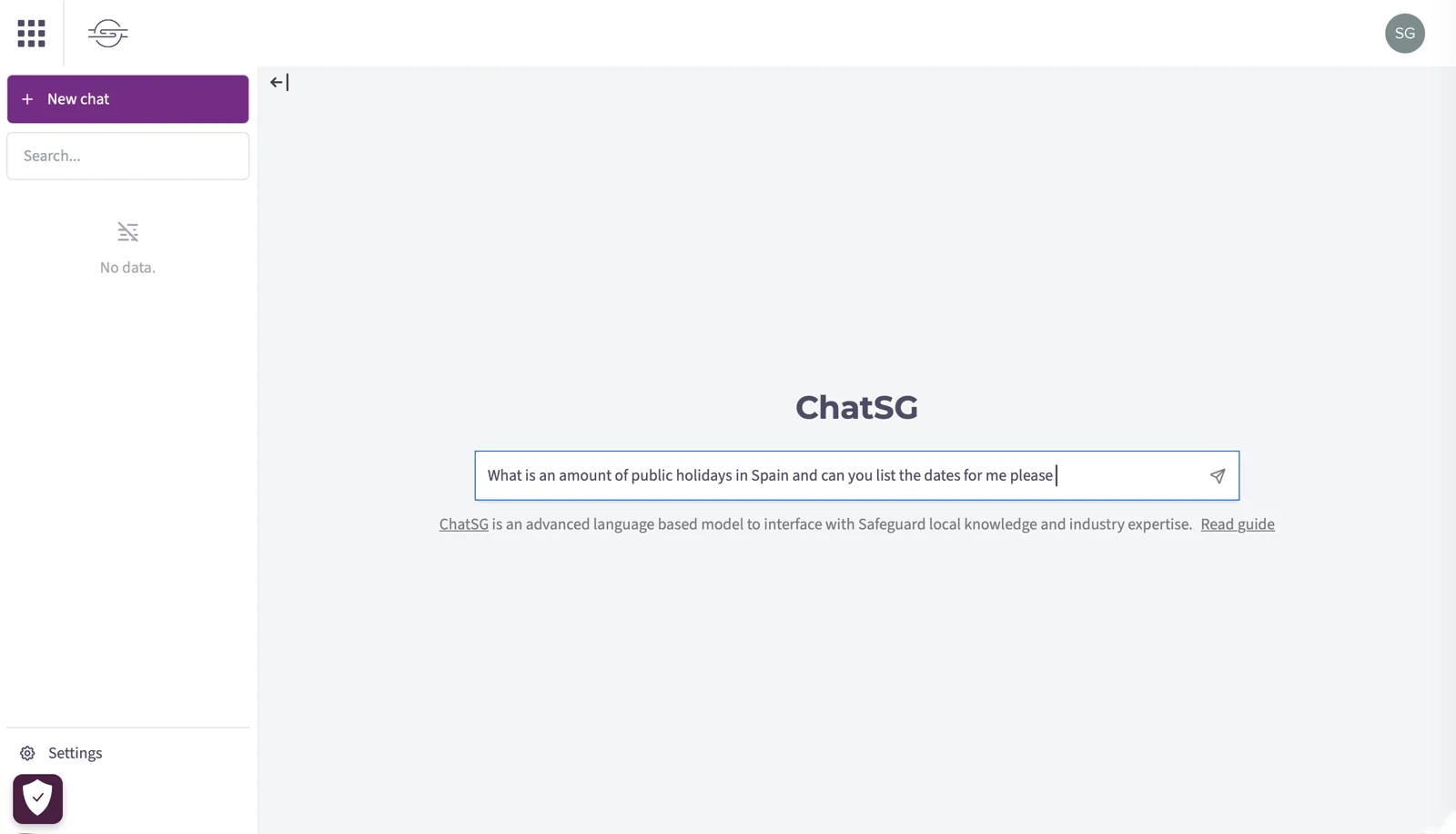
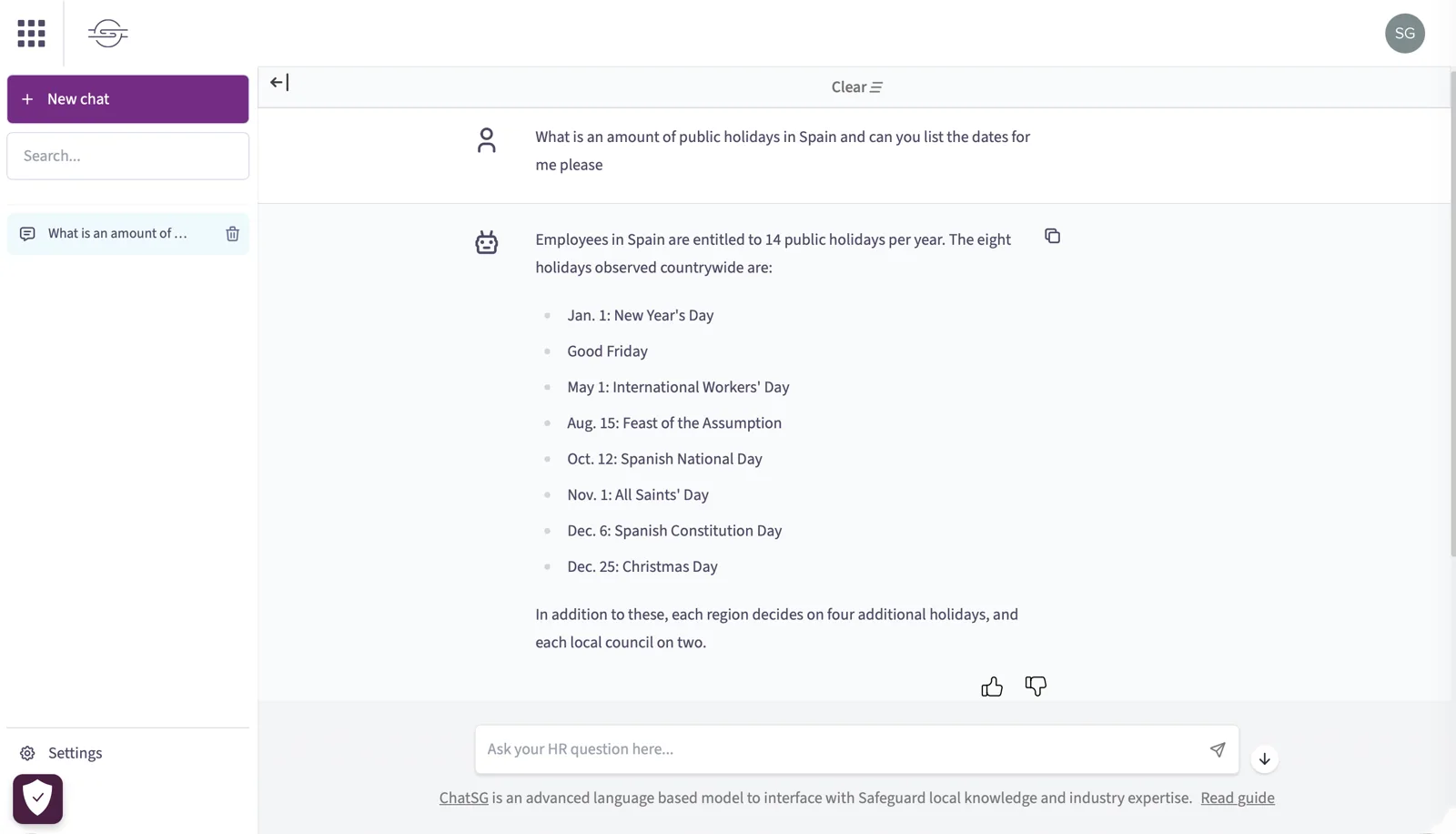
ChatSG put Safeguard's HR knowledge base behind a conversational interface. Customers could ask questions about employment law, benefits, hiring and policies in their own words rather than searching through documentation.
The early AI models could produce fluent answers that were still wrong. One example involved asking about public holidays in Spain and receiving an answer that incorrectly blended national and Catalan holidays.
The solution was to narrow the system rather than make it pretend to know everything. Answers came from Safeguard's maintained knowledge base, and the interface guided users toward questions that the system could reliably answer.
ChatSG, explainedA conversation about the product with Safeguard Global's CTO.
The second challenge was helping customers understand employment costs across markets.
The initial concept was an interactive map showing salary ranges by country. It looked like a natural way to explore the data.
We put it in front of five customers.
They didn't want to explore. They wanted to check a number for a budget.
So we changed the experience to a searchable table.
That research changed the product before we shipped the wrong interaction.
Both projects reinforced the same principle: the right AI or data experience starts with understanding what the user is actually trying to accomplish.
For ChatSG, that meant defining where the AI could be trusted.
For Workforce Analytics, it meant discovering that customers weren't exploring the data at all. They were looking for an answer.
Both are live in the Safeguard platform today, available with a free account.
In 2022 the hard part of AI wasn't making it clever. It was making it narrow enough to be right.